Do You Need a Permit to Remove a Tree in Shawnee
Shawnee publishes no permit requirement for taking a tree off private property outside a development project. Its tree rules sit in two places instead: the development review process, where a Landscape Plan has to show every tree twelve inches caliper or larger proposed for removal, and the public right-of-way. Before a large or unusual removal we still suggest a call to the Planning Division on that specific parcel.
Kansas and Missouri Answer the Neighbor’s Tree Differently
This is the single most consequential fact on this side of the metro. Kansas follows the nuisance rule laid down in Pierce v. Casady, where a landowner whose neighbor’s tree does substantial harm or creates imminent danger can compel abatement or seek damages. Missouri follows the Massachusetts rule instead: no cause of action at all for a healthy neighboring tree, and self-help at your own cost.
Trimming Overhanging Branches Back to the Property Line
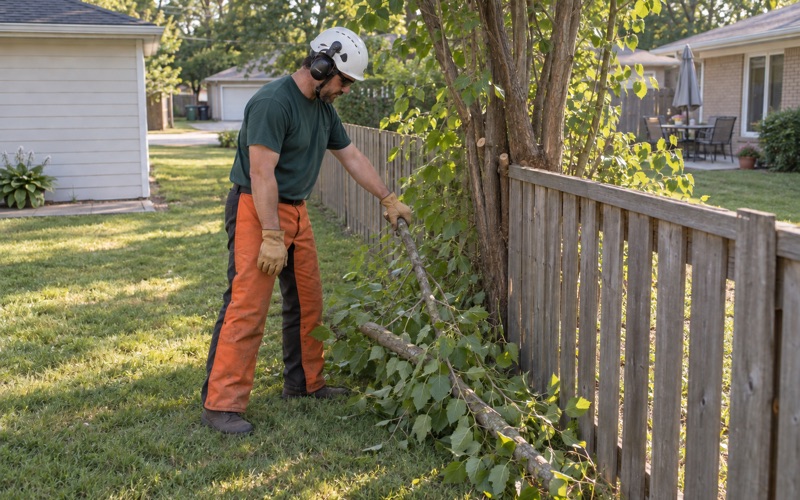
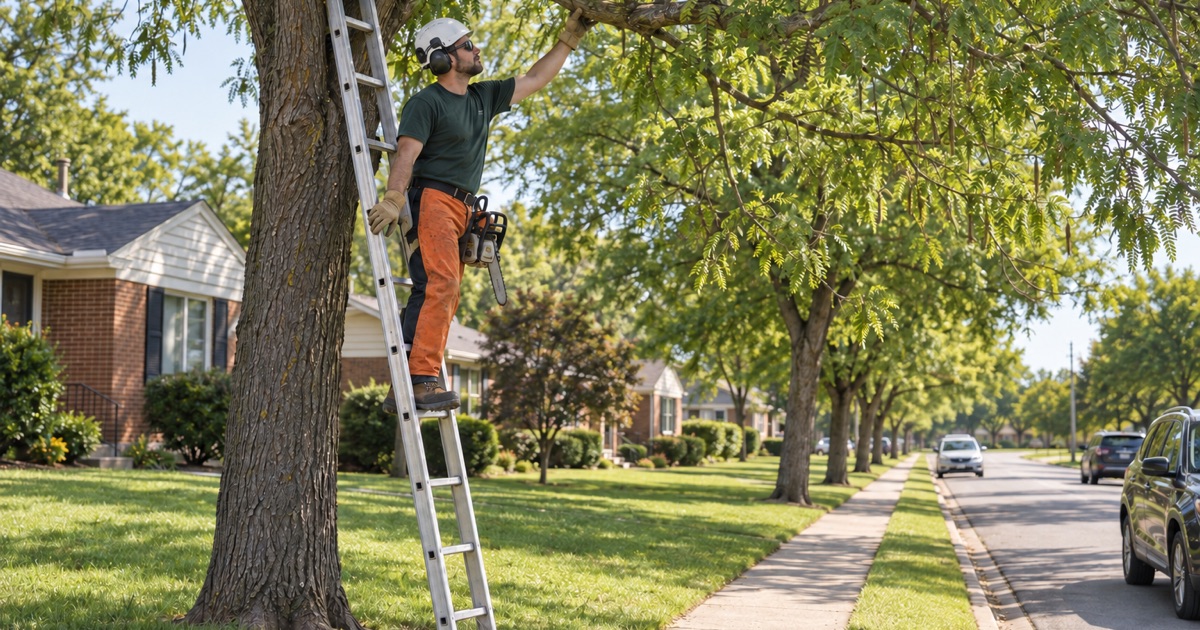
Both states let you cut what overhangs your side, and neither lets you cross the line to do it. In Kansas, Pierce v. Casady is explicit that a landowner may trim overhanging branches but may not enter the neighbor’s land. Cutting so far back that the tree dies turns a lawful trim into a damaged-tree claim against you, which is the part that gets skipped.
When a Neighbor Can Be Made to Abate a Tree
On the Kansas side the threshold is substantial harm or imminent danger, not annoyance, leaf litter or shade. That means the case is built out of documented condition rather than out of frustration: what the defect is, what it is over, and why failure is likely. On the Missouri side a healthy tree gives you no cause of action however far it overhangs.
A Dead Tree the Owner Knew About Changes Who Pays
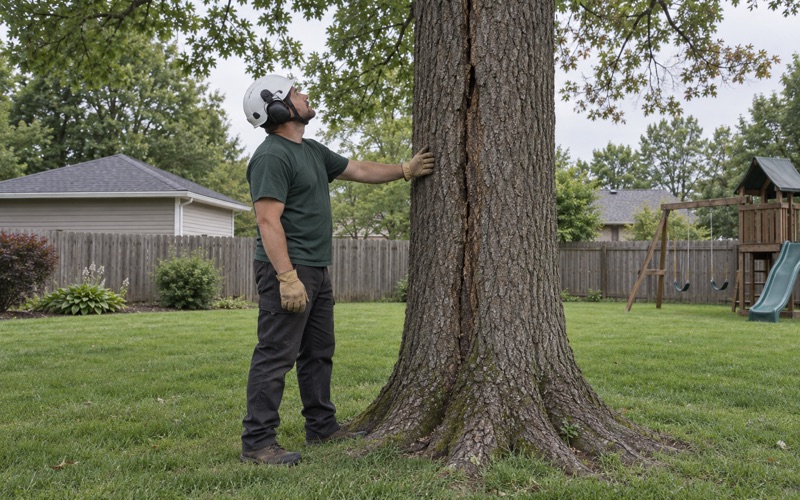
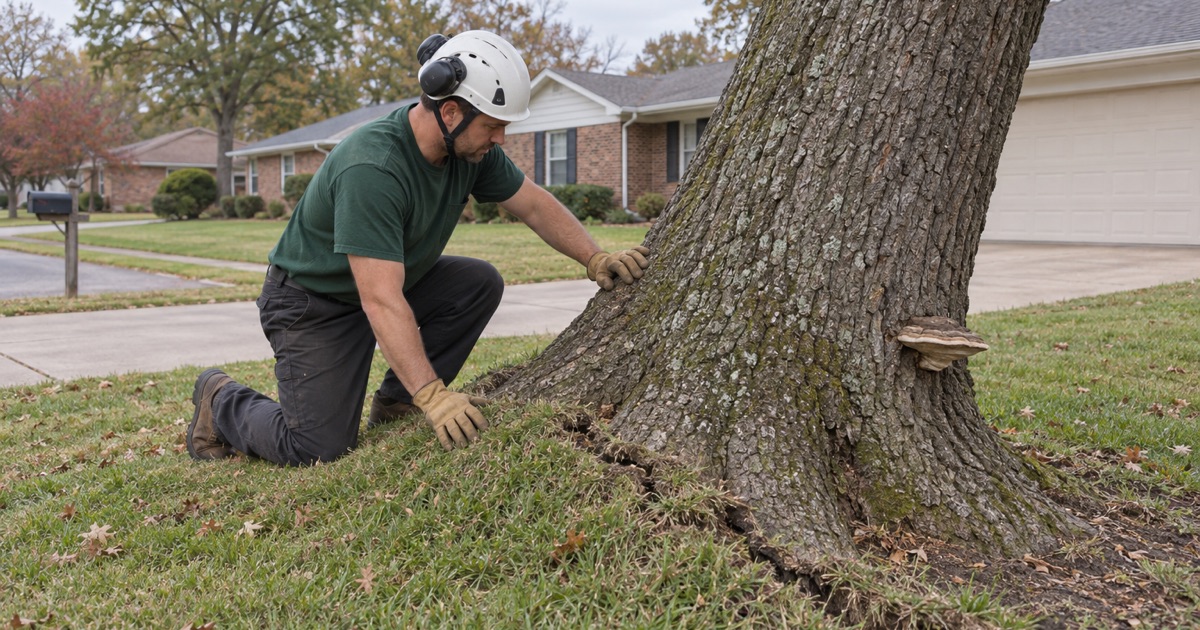
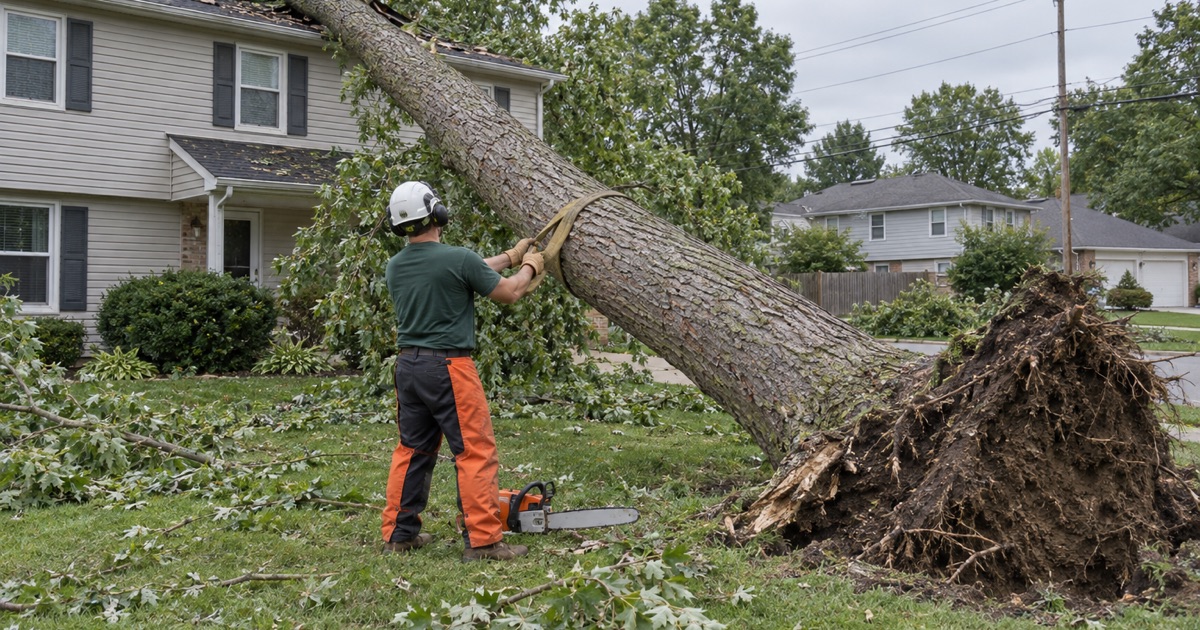
A healthy tree that fails in a storm is generally nobody’s fault. A tree the owner had been told was dead or defective is a different conversation entirely, because knowledge is what converts an act of nature into negligence. That is why a written condition assessment, delivered and dated, matters far more than a verbal warning over the fence.
Street Trees and the Right-of-Way in Shawnee
Shawnee does not run public works crews out to prune street trees. The City states that adjacent property owners maintain the trees in the public right-of-way, and it routes clearance complaints to Code Enforcement. That is the opposite of what most owners assume, and the right-of-way width is set street by street, so the strip in front of your house should be checked against the plat rather than guessed at from the curb.
Neither State Licenses Tree Work, So Check This Instead
Kansas issues no arborist or tree-work license, and neither does Missouri. Widely syndicated pages claiming Kansas requires an arborist license are simply wrong; the only relevant Kansas state credential is the Live Plant Dealer License, which is a nursery license. What is worth checking is current insurance covering tree work specifically, and whether the crew works to ANSI A300 for pruning and Z133 for safety.
Kansas City, Kansas Licenses Tree Crews by Name
One jurisdiction in this metro does regulate the trade directly. Unified Government Code Chapter 32, Article VII, Section 32-371 creates an annual arborist license and makes it unlawful to engage in the business of pruning, treating or removing trees without one, carrying $1,000,000 bodily injury and $500,000 property damage cover. If your address is in Wyandotte County, that is a real question to ask a bidder.
Trees as Regulated Aviation Obstructions in Kansas
Kansas counties adopt airport zoning under K.S.A. 3-703, and those overlays treat a tree as an obstruction subject to height limits like any structure. Miami County’s regulations carry a full airport zoning article whose approach surfaces expand outward from the runway, and Johnson County’s regulations name their adopting cities directly. On acreage near a field it is a real constraint on what may be left standing.
What an Arborist Letter Does in a Property-Line Dispute
An arborist letter is a dated, written opinion on condition, defect and likelihood of failure that a neighbor, an insurer or a court can read. It converts a boundary argument from two opinions into one documented assessment and one opinion. On the Kansas side, where abatement turns on substantial harm or imminent danger, that document is frequently the whole case.